
Wigs for Beginners: A Starter’s Guide
A Complete Beginner Wig Guide for First-Time Wearers in South Africa
Buying your first wig can feel exciting — and overwhelming at the same time.
You see terms like lace front, 13×4 frontal, density, Remy, HD lace… and suddenly it feels more technical than expected.
If you’ve searched for:
- beginner wig guide
- how to wear wig first time
- wig installation for beginners
This step-by-step guide will walk you through everything you need to know — from choosing your first wig to wearing it confidently and caring for it properly.
Let’s simplify it.
Step 1: Choosing Your First Wig
The most common mistake beginners make is overcomplicating the first purchase.
Your first wig does not need to be the most advanced option available.
Start with Beginner-Friendly Choices
1. Lace Front Wig or 4×4 Closure?
- Lace Front Wig: Natural hairline, flexible parting at the front, beginner-friendly.
- 4×4 Lace Closure: Smaller lace area, easier maintenance, great for low effort styling.
If you want the most natural hairline look for your first purchase, a Lace Front Wig is usually the safest starting point.
2. What Length Should You Choose?
For beginners, stick to:
- 16 inches
- 18 inches
- 20 inches
Extremely long wigs require more maintenance and styling skill.
3. What Density Is Best?
- 150% density = natural everyday look (recommended for beginners)
- 180% density = fuller glam look
Starting with 150% keeps things realistic and easier to manage.
4. What Texture Is Easiest?
- Straight
- Body Wave
These are easier to maintain than tight curls or deep waves for first-time wearers.
Step 2: What You’ll Need Before Installing
Before wearing your wig for the first time, gather the essentials.
You’ll need:
- Wig cap
- Adhesive or glue-less strap method
- Wide-tooth comb or wig brush
- Silk scarf or bonnet
- Optional: Lace tint spray
You can find most of these in a dedicated Wig Accessories section.
Preparation makes installation smoother.
Step 3: How to Wear a Wig for the First Time
Let’s break it down simply.
1. Prep Your Natural Hair
- Braid hair flat or slick it down
- Keep the base as flat as possible
- Avoid bulky sections
The flatter your base, the more natural the wig looks.
2. Apply the Wig Cap
- Secure your cap tightly but comfortably
- Ensure hair is fully tucked in
- If needed, lightly tint the cap to match your skin tone
This improves blending.
3. Position the Wig
- Place wig gently at your natural hairline
- Adjust straps inside for snug fit
- Ensure ears align properly
Do not rush this step.
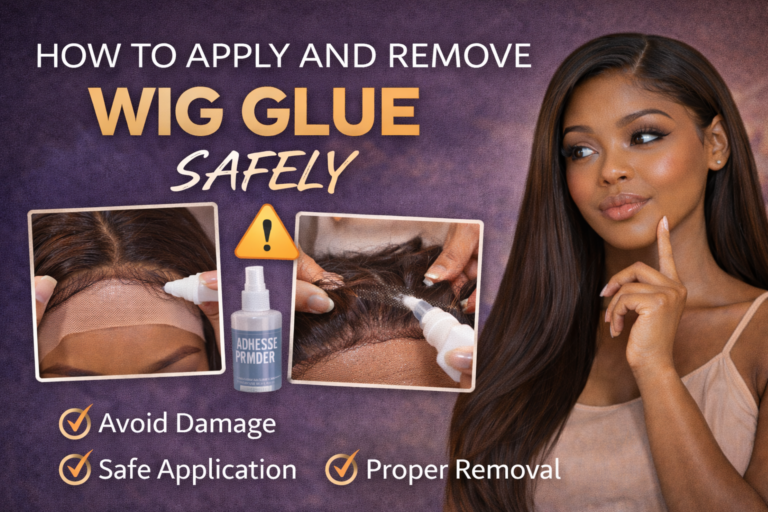
4. Secure It
You can:
- Use glue
- Use wig tape
- Use glue-less straps
If you’re new, start with minimal adhesive until you gain confidence.
5. Trim Lace Carefully
- Cut in small zig-zag motions
- Never cut straight across
- Leave slight excess lace
Take your time — this step affects realism.
Step 4: First-Day Styling Tips
The first time you wear your wig, keep it simple.
✔️ Use minimal heat
✔️ Avoid heavy products
✔️ Don’t overpluck the hairline
✔️ Gently style baby hairs (optional)
Many beginners over-style their first wig. Simplicity looks best.
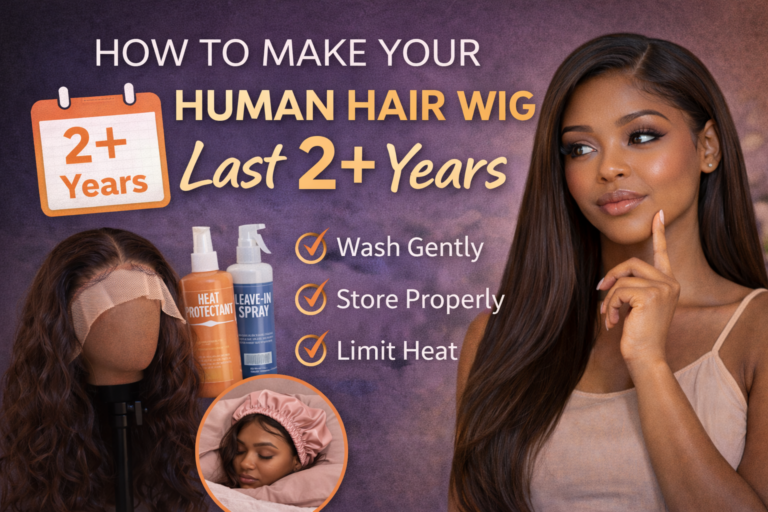
Step 5: Basic Human Hair Wig Care
A human hair wig should be treated like natural hair.
Washing
- Every 2–3 weeks (depending on wear)
- Use sulfate-free shampoo
- Condition thoroughly
Detangling
- Always start from ends
- Work upward slowly
- Never brush aggressively
Drying
- Air dry on a wig stand
- Avoid high heat blow drying
Storage
- Store on stand
- Keep away from dust
- Avoid stuffing in drawers
From studio experience, wigs that are properly washed, stored, and protected last significantly longer.
Step 6: Common Beginner Mistakes
Avoid these:
Choosing Too High Density
Fuller isn’t always better for a natural look.
Overusing Glue
Too much adhesive damages lace and irritates scalp.
Sleeping Without Protection
Always use a silk bonnet or remove the wig.
Ignoring Lace Type
Thick lace will look visible if not matched properly.
Step 7: Building Confidence
The first wear may feel unfamiliar. That’s normal.
After a few installs, you’ll:
- Position faster
- Blend better
- Style with ease
- Understand maintenance rhythm
From experience selecting and inspecting wigs, the biggest transformation beginners experience isn’t just appearance — it’s confidence.
Once you understand prep and care, wigs become empowering rather than intimidating.
Image Placement Suggestions
- Beginner applying wig cap step-by-step
- Close-up of lace front blending
- Flat lay of beginner wig kit
- Proper wig storage on stand
Where to Start Shopping
When you’re ready, explore:
- Lace Front Wig options
- Weft Bundles if building custom wigs
- Wig Accessories for essentials
- Shop main page for curated beginner-friendly units
Start simple. Build skill gradually.
Final Thoughts
Your first wig doesn’t need to be perfect.
It needs to be manageable.
Stick to:
- Natural density
- Medium length
- Simple texture
- Proper accessories
Wearing a wig for the first time is a learning curve — not a test.
Take your time. Follow the basics.
Confidence grows with experience.
And once you understand the process, you’ll realise it’s far less complicated than it first appeared.