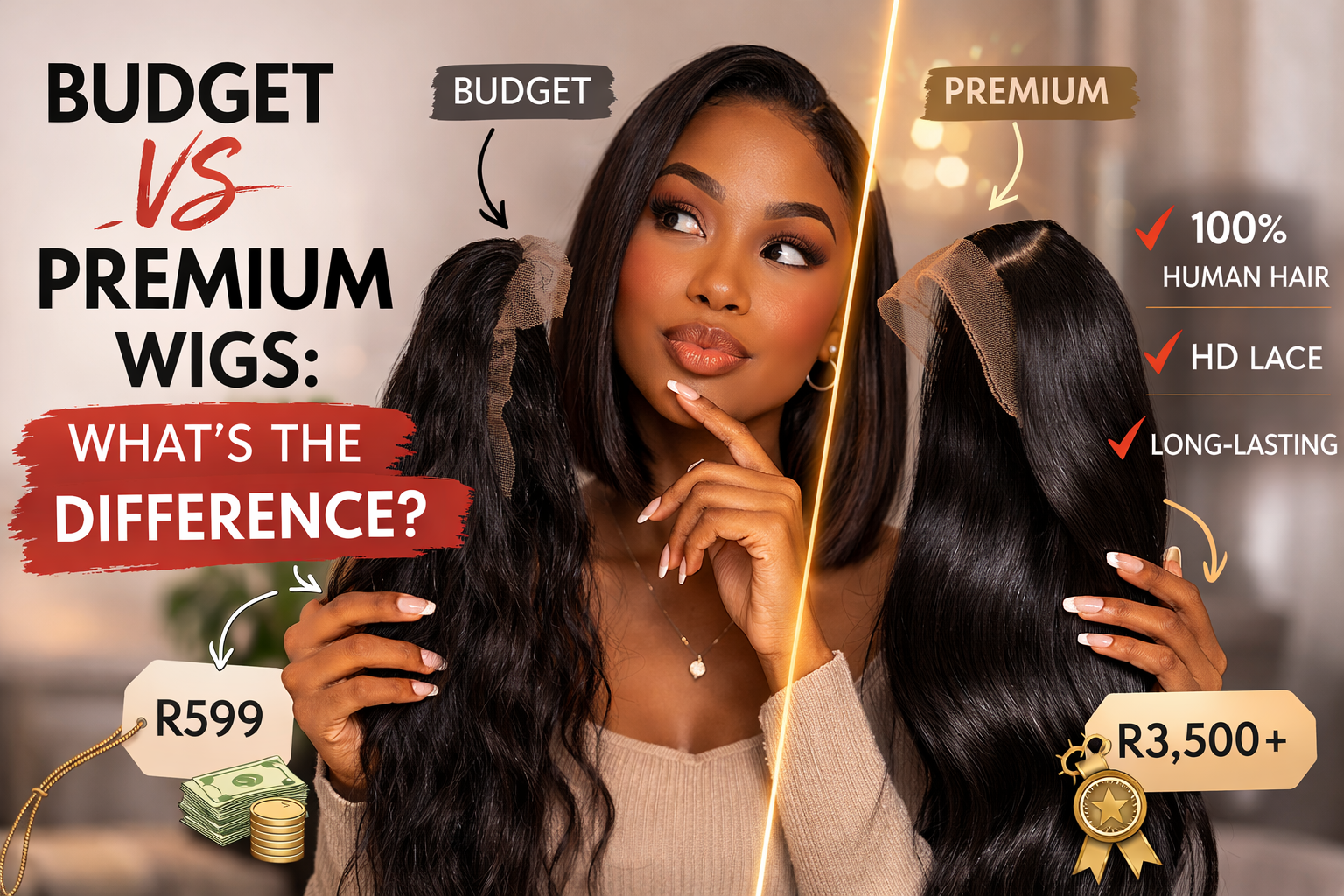
Budget vs Premium Wigs: What’s the Difference?
If you’ve ever shopped for wigs online in South Africa, you’ve probably asked:
“Why is this wig R3,000+ when another one costs a fraction of that?”
Or
“Is an expensive wig really worth it?”
As the local wig industry grows, more South Africans are investing in higher-quality human hair wigs. Media reports have even highlighted buyers willingly paying several thousand rand for durable, natural-looking units — proving that quality has become a priority rather than a luxury.
But what actually separates a budget wig from a premium one?
Let’s break it down clearly.
What Makes a Wig “Budget”?
Budget wigs aren’t automatically bad. They simply operate within a different quality tier.
Common Characteristics of Budget Wigs
- Synthetic or blended fibres
- Lower density (often 130–150%)
- Basic lace material
- Machine-made construction
- Limited quality control
- Shorter lifespan
Budget wigs are often mass-produced at scale to keep costs low.
Pros of Budget Wigs
- Affordable entry point
- Suitable for occasional wear
- Ideal for trial colours or short-term looks
- Lower initial investment
Cons of Budget Wigs
- Limited heat styling flexibility
- Less realistic hairline
- Shorter lifespan
- Higher tangling potential
- Less durability over time
For someone wearing a wig occasionally or experimenting with colour, a budget option can make sense.
But for daily wear, limitations become more noticeable.
What Makes a Wig “Premium”?
Premium wigs are priced higher because of the materials and craftsmanship involved.
Key Features of Premium Wigs
- 100% human hair
- Remy cuticle alignment
- Higher-quality lace (HD or transparent)
- Hand-tied ventilation
- Consistent density (150–180%)
- Stronger cap construction
A Premium Lace Front Wig typically involves skilled labour in ventilating individual strands into lace. This process takes time and expertise.
Unlike mass-produced units, premium wigs go through more thorough quality checks.
Cost Breakdown: Where Does the Money Go?
Many buyers assume high pricing equals high markup. In reality, several real costs contribute to premium pricing.
1. Hair Sourcing
Ethically sourced, high-quality human hair is expensive. Remy hair with aligned cuticles costs significantly more than mixed or processed fibres.
2. Skilled Labour
Hand-tying lace front wigs requires precision. Each strand is individually ventilated into lace.
3. Lace Quality
HD lace is thinner and more natural-looking — but more fragile and expensive to produce.
4. Import and Exchange Rates
South African wig suppliers import hair. Exchange rate fluctuations directly impact pricing.
5. Quality Control
Premium sellers inspect:
- Cuticle alignment
- Density consistency
- Lace stitching
- Shedding levels
This adds cost but improves durability.
Longevity Comparison
The most important difference between cheap wig vs expensive wig lies in lifespan.
Budget Wig Lifespan
- 1–6 months (depending on use)
- Limited heat styling tolerance
- Faster fibre deterioration
Premium Wig Lifespan
- 1–3 years (with proper care)
- Can be restyled
- Holds structure longer
- Maintains realistic appearance
From experience in studio settings, clients who invest in premium lace front wigs typically get two to three times longer wear — provided they maintain them correctly.
The cost-per-wear often becomes lower over time.
Craftsmanship Matters
Premium wigs often feature:
- Bleached knots for realism
- Adjustable straps for comfort
- Reinforced stitching
- Breathable cap lining
Budget wigs may skip these refinements to reduce manufacturing costs.
The difference becomes clear in:
- Hairline realism
- Comfort during long wear
- Resistance to shedding
- Overall appearance under natural light
When Budget Wigs Make Sense
There are situations where a budget wig is practical:
- Occasional events
- Costume styling
- Testing a bold colour
- Short-term transitional styling
If you’re not wearing a wig daily, budget may be sufficient.
When Premium Wigs Are Worth It
Premium wigs are better suited for:
- Daily wear
- Long-term protective styling
- Heat styling flexibility
- Professional settings
- Frequent re-styling
If you rely on your wig regularly, durability matters.
Many buyers find that investing once in a high-quality unit prevents repeated repurchasing of lower-quality options.
Comparison Table
| Feature | Budget Wig | Premium Wig |
|---|---|---|
| Material | Synthetic or blend | 100% Human Hair |
| Lace Quality | Basic lace | HD/Transparent lace |
| Density | Lower | Consistent 150–180% |
| Lifespan | Short-term | Long-term |
| Styling Flexibility | Limited | High |
| Heat Tolerance | Minimal | Full heat styling |
| Cost | Lower upfront | Higher upfront |
Maintenance Cost Perspective
An overlooked factor is maintenance cost over time.
Budget wigs may need replacement multiple times per year.
Premium wigs, while more expensive initially, may last significantly longer — reducing long-term replacement expenses.
The phrase “best quality wig SA” isn’t about luxury. It’s about longevity and value.
Psychological Factor: Why Quality Feels Different
Premium wigs:
- Move naturally
- Blend seamlessly
- Feel softer
- Require less constant fixing
Confidence increases when your wig behaves like natural hair.
Budget wigs can sometimes require constant adjustment — which affects comfort.
So, Which Should You Choose?
Ask yourself:
- Is this for daily or occasional use?
- Do I need heat styling flexibility?
- Am I investing long-term?
- Do I prefer lower upfront cost or better longevity?
There is no universal answer.
But understanding the difference helps you make a rational choice instead of reacting to price alone.
Final Thoughts
The difference between a cheap wig and an expensive wig is not just branding. It’s material, craftsmanship, durability and long-term value.
Budget wigs serve a purpose.
Premium wigs deliver longevity.
If you’re exploring options, compare entry-level bundle deals like the 3 Bundle Deals page with higher-end units like a Premium Lace Front Wig to see how construction and material vary.
Smart buying isn’t about spending the most.
It’s about understanding what you’re paying for — and choosing based on your lifestyle, not just the price tag.